

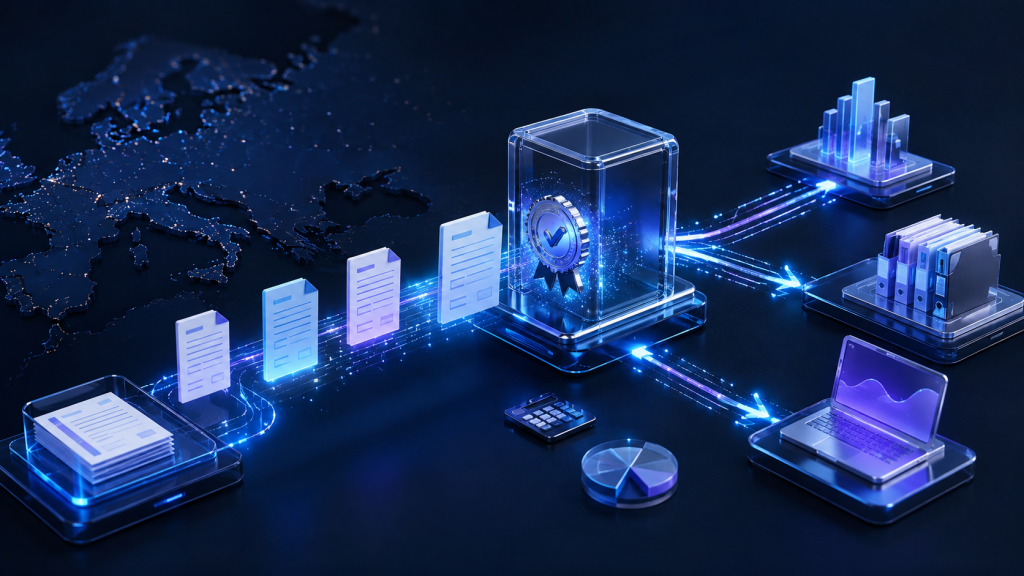
The French electronic invoicing reform changes the way companies issue, receive and transmit invoice data. From 1 September 2026, all taxable businesses must be able to receive electronic invoices. Issuance and e-reporting requirements will take effect according to a phased timetable.
A more structured flow
An electronic invoice is not simply a PDF sent by email. Data is transmitted in structured or hybrid formats through approved platforms. It can be integrated more directly into accounting systems.
Impact on ERP systems
- quality of customer and supplier identifiers;
- status and rejection management;
- mapping of mandatory data;
- integration with the selected platform;
- archiving and audit trail;
- handling of special and international cases.
Impact on consolidation
The reform does not directly impose a new consolidation process. However, it improves data availability and granularity, which can accelerate cut-off procedures, intercompany transaction monitoring and analysis of revenue or purchases.
An opportunity for intercompany processes
When French companies within a group exchange structured invoices, references, dates, amounts and statuses can feed intercompany reconciliation earlier. This nevertheless requires the harmonization of partner identifiers and reciprocal accounts.
Impact on reporting and data
Invoice data can enrich margin, payment term, DSO, DPO and cash forecast analyses. It must be integrated into a governed architecture rather than multiplied across new files.
Risks to anticipate
- incomplete master data;
- unprocessed rejections;
- disconnect between the invoice and the accounting entry;
- duplicates during the transition;
- poor handling of credit notes and advance payments;
- lack of reconciliation between the platform and the ERP.
Action plan
- map flows and use cases;
- clean third-party master data;
- select the architecture and interfaces;
- test formats and statuses;
- define end-to-end controls;
- train users and organize support.
Electronic invoicing should be treated as a financial data project. When properly integrated, it can reduce manual entry, improve control and accelerate several stages of the record-to-report process.